

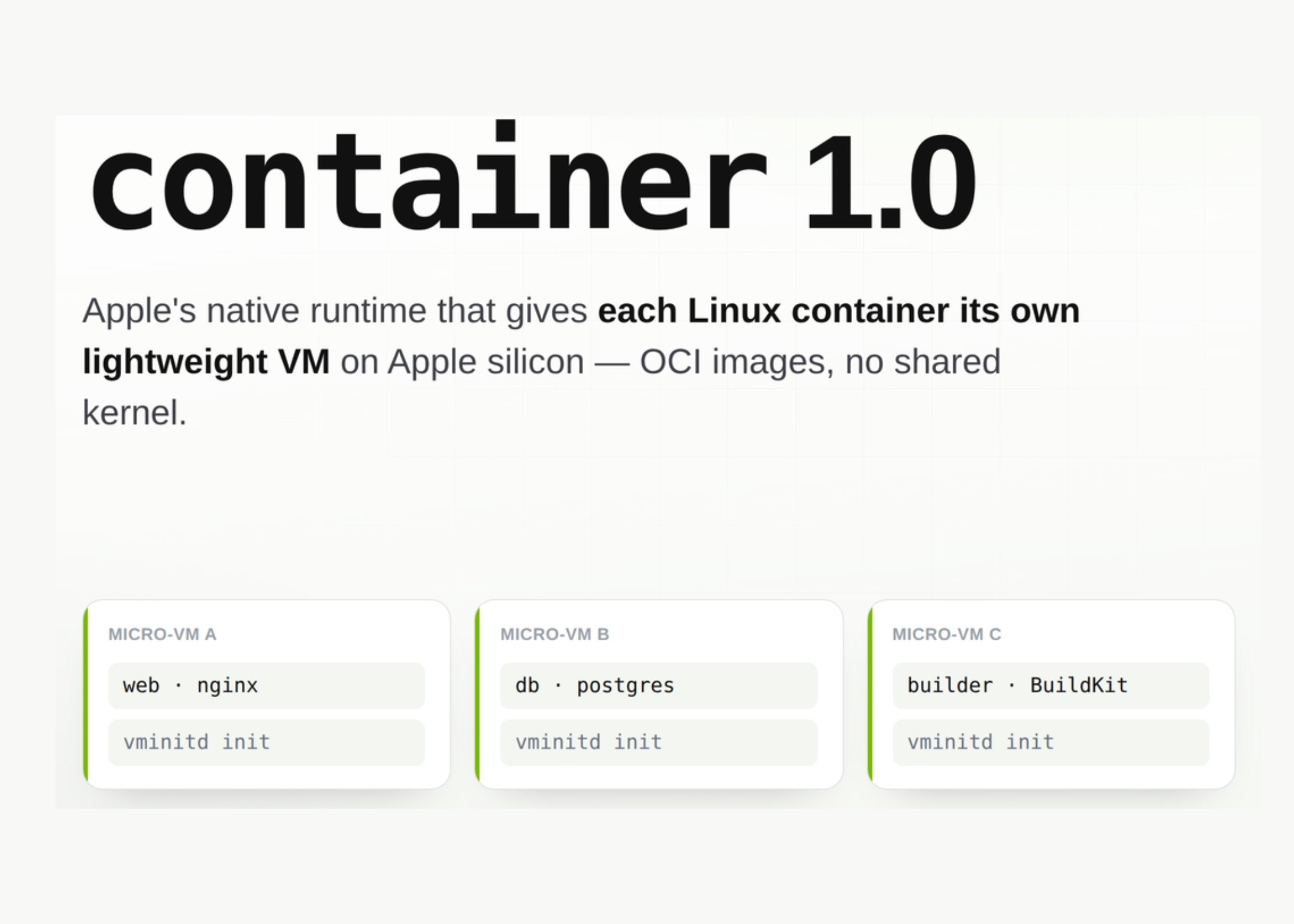
Apple just dropped a game‑changing open‑source tool called **container**, built in **Swift**, that lets developers run **Linux containers** as lightweight virtual machines on **Apple Silicon**. The move signals Apple’s deeper commitment to the open‑source ecosystem and promises a smoother workflow for macOS and iOS developers.
What is container?
At its core, container stitches together the best of Docker‑style containerization with the performance of hyper‑visor‑based VMs. It runs on macOS, but the resulting VMs are fully Linux‑compatible, giving developers the flexibility to test, build, and deploy across operating systems—all from a single Terminal command.
How It Works
When you launch a container, the tool spawns a minimal‑overhead VM that boots a lightweight Linux kernel. Inside this VM, your container image runs just like it would on a dedicated Linux host, but with the speed and security benefits of Apple’s native virtualization framework.
Key Features at a Glance
- Zero‑overhead Hypervisor – Uses Apple’s Hypervisor.framework for near‑zero performance loss.
- Swift‑First API – Developers can script and extend functionality directly in Swift.
- Native macOS Integration – Seamlessly shares file systems and networking between macOS and the Linux VM.
- Open‑Source Community – Hosted on GitHub with permissive licensing, inviting rapid contributions.
Why It Matters for Developers
Cross‑platform consistency is a pain point for many teams. With container, a single image that runs on macOS, Windows, or Linux can now be tested in a truly native environment without the need for complex Docker Desktop setups or external cloud services.
Apple’s Swift Advantage
Swift’s safety and performance characteristics make it an ideal language for building system tools. By writing container in Swift, Apple lowers the barrier for developers already comfortable with iOS/macOS development to start contributing to a low‑level virtualization stack.
Impact on the Open‑Source Landscape
Apple’s open‑source push extends beyond hardware drivers. The release of container demonstrates a willingness to give the community powerful, low‑level tools that were previously only available on Linux. This could accelerate the rise of macOS as a first‑class development platform for backend services.
Looking Ahead
Apple has hinted at future integrations, such as built‑in support for Kubernetes and easier migration paths for existing Docker users. The roadmap suggests an ecosystem where macOS can serve as the primary node in hybrid cloud clusters.
Get Involved
Check out the GitHub repository, try container on your Apple Silicon Mac, and contribute to the discussion. Your feedback could shape the next iteration of this promising tool.
Ready to elevate your development workflow? Clone the repo, run a test container today, and join the conversation on how Apple Silicon is redefining cross‑platform development. Happy coding!


💬 Comments
Comments
Post a Comment