

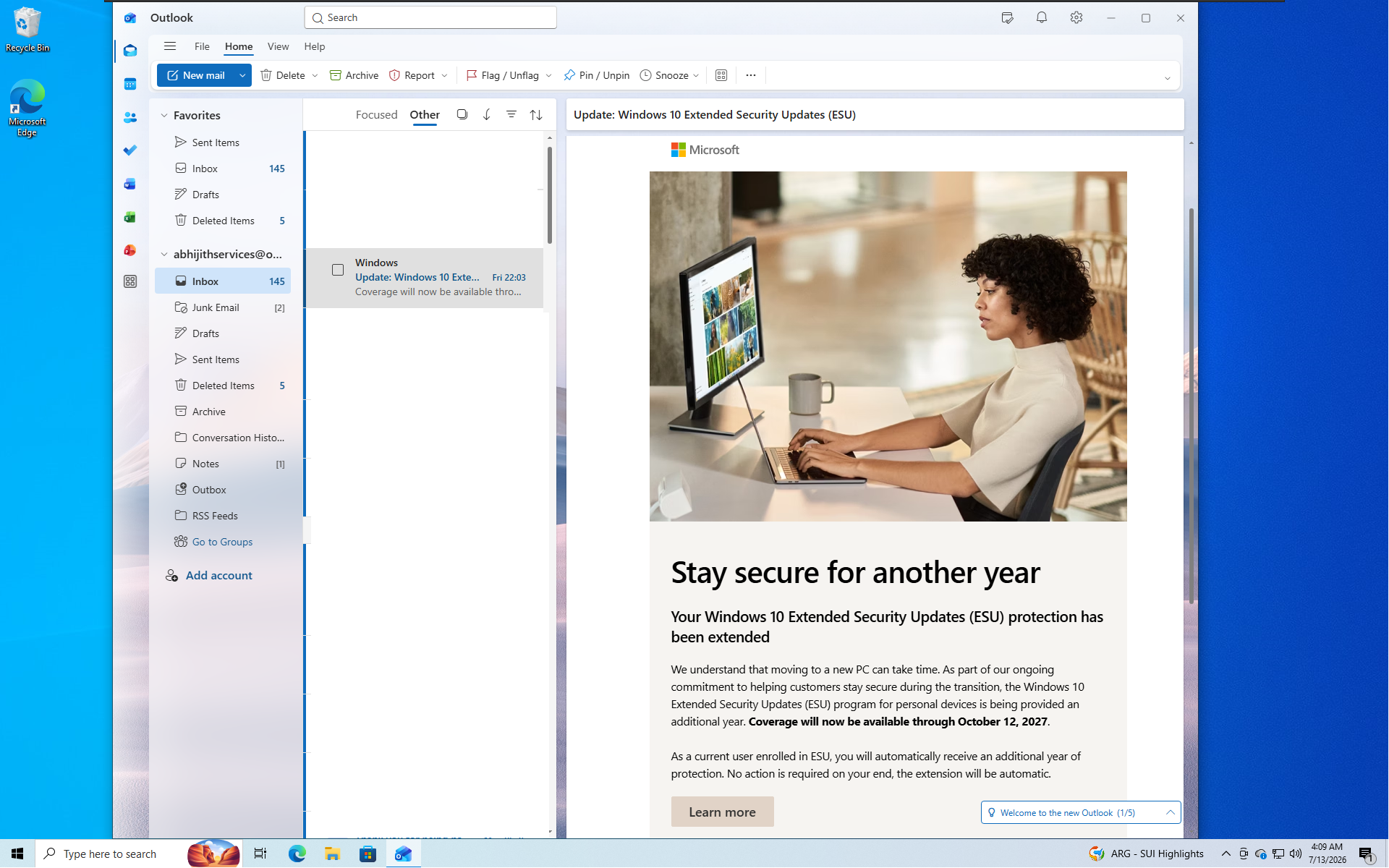
Microsoft’s new Windows 10 Extended Security Update (ESU) email has'accented on extending support until October 2027, but it does little to nudge users toward the next generation—Windows 11. For businesses and home users in the US, UK, and Canada, the message is clear: stay secure, but decide independently whether to upgrade.
What the Email Actually Says
The email, sent to all enrolled Windows 10 Professional and Enterprise users, confirms that the ESU will automatically roll out for those who have signed up. It includes a brief FAQ that explains the difference between ESU and the regular Windows 10 lifecycle, and it reassures users that no additional action is required.
Why the Upgrade Narrative Is Missing
Microsoft’s communications team chose to focus on security maintenance rather than feature upgrades. The company has faced criticism for a slow roll‑out of Windows 11, especially after the Windows 10 22H2 update, which many users still prefer for its lower memory footprint and faster File Explorer performance.
Key Takeaways for Users
- Extended Protection: Windows 10 will receive security patches until October 2027, providing peace of mind for legacy systems.
- No Forced Upgrade: The email does not compel a move to Windows 11, giving businesses the flexibility to plan their migration.
- Performance Trade‑offs: Windows 11 offers a modern UI but requires more RAM and can be slower on older hardware.
- Compatibility Check: Before upgrading Catalunya, check your device’s hardware health score via the PC Health Check tool.
- License Implications: ESU is an add‑on for existing Windows 10 licenses; Windows 11 requires a separate license or an upgrade path through volume licensing.
What This Means for the North American Market
In the United States, many enterprises still rely on Windows 10 for its stability in regulated industries. In the United Kingdom and Canada, the same trend persists, especially in government and education sectors where hardware budgets are tight.
Microsoft’s choice to highlight security over new features reflects a broader strategy: keep legacy users safe while quietly pushing the Windows 11 ecosystem through other channels—like the Windows Insider Program and Microsoft Store promotions.
Next Steps for IT Leaders
IT managers should review the ESU eligibility list to confirm coverage, assess the readiness of their Windows isia for a future upgrade, and consider the cost–benefit analysis of staying on Windows 10 versus moving to Windows 11.
For individuals, the decision hinges on hardware compatibility and feature preferences. Windows 11’s revamped Start menu and improved touch support may be enticing, but the extra memory overhead and occasional driver quirks can be a hurdle.
Ultimately, Microsoft’s ESU email underscores a clear message: security is non‑negotiable, but the upgrade path remains optional. Whether you stay on Windows 10 or leap to Windows 11, the choice is yours—just make sure you’re fully informed.
Stay ahead of the curve—check your system’s health, evaluate your upgrade strategy, and keep your data protected. For more insights, follow us on LinkedIn and Twitter.
💬 Comments
Comments
Post a Comment