

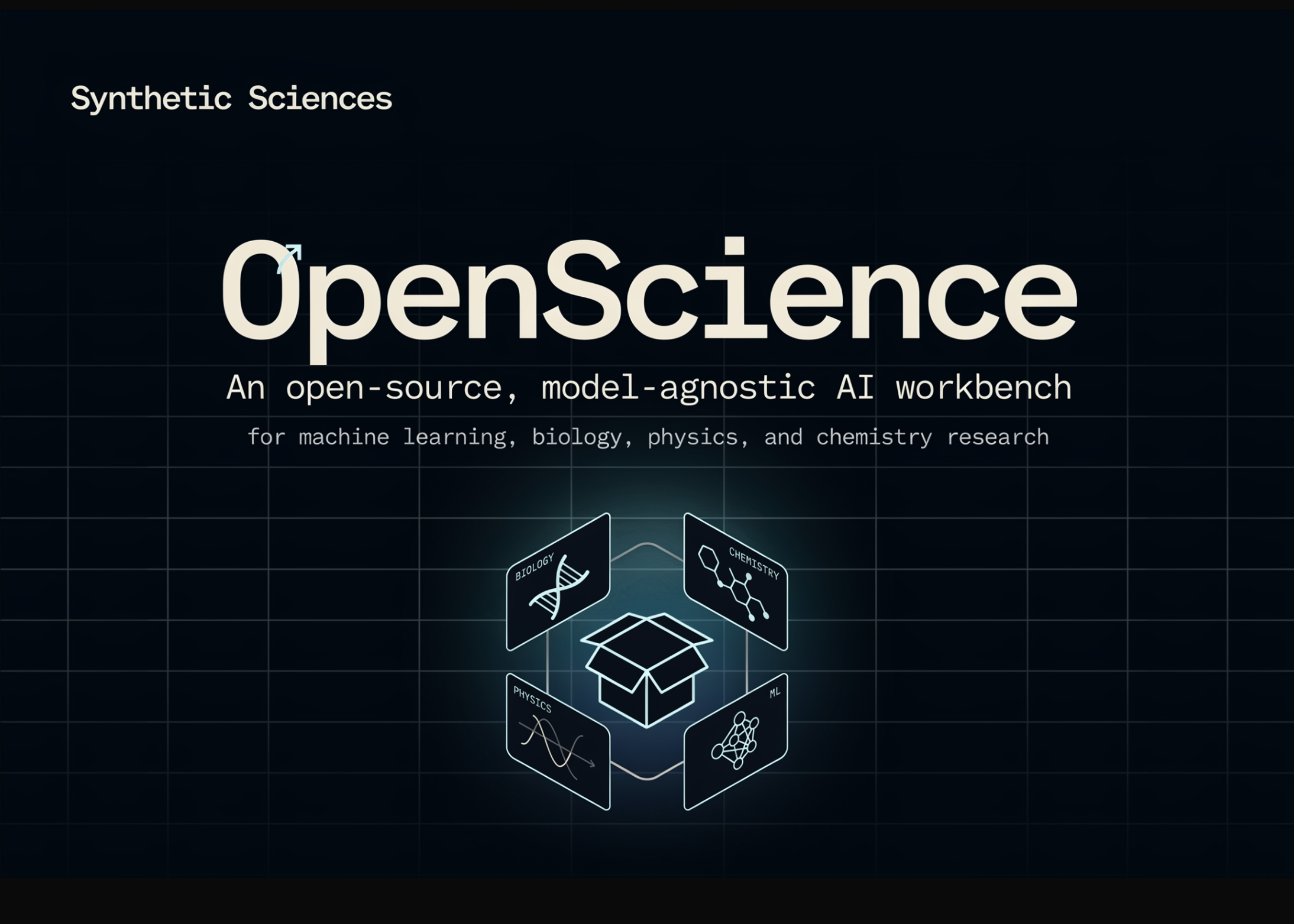
When Synthetic Sciences dropped its newest release, OpenScience, the tech world buzzed. The company announced a fully open‑source, model‑agnostic AI workbench that lets researchers plug in any front‑end or open‑weight model using their own API keys. The result? A single platform that runs end‑to‑end machine‑learning workflows across biology, physics, and chemistry.
What Makes OpenScience a Game‑Changer?
OpenScience isn’t just another AI framework. It’s a turnkey environment that removes the friction between data, models, and domain expertise. Here’s why it matters:
- Model‑agnostic architecture – Use GPT‑4, Claude, or any open‑weight model without губ. The platform simply requires an API key.
- Full scientific stack значительно – From data ingestion to model training, evaluation, and deployment持.
- 250+ editable skills – Out‑of‑the‑box tools for genomics, quantum chemistry, and material science that you can tweak to fit your project.
- Queryable scientific databases – Built‑in access to curated datasets across biology, physics, and chemistry.
- Runs on your own infrastructure – No cloud lock‑inારો. Deploy locally or on-premise for compliance and cost control.
Why It Matters for Researchers in North America and the UK
Academic labs, biotech startups, and government agencies face budget constraints and regulatory hurdles. OpenScience’s open‑source license (Apache‑2.0) and infrastructure flexibility mean teams can:
- Keep sensitive data on premises, meeting HIPAA and GDPR standards.
- Scale experiments without paying per‑token fees to a single vendor.
- Rapidly prototype cross‑disciplinary projects—e.g., using AI to predict protein‑drug interactions while simultaneously simulating quantum‑chemical binding.
How to Get Started
Getting up and running is surprisingly straightforward. Follow these steps to launch your own OpenScience instance:
- Clone the repo from GitHub, then install the dependencies via
pip install openscience‑workbench. - Configure API keys for your chosen models in the
config.yamlfile. - Deploy locally with Docker Compose, or on your cluster using Kubernetes manifests.
- Explore the skill library and start building your first pipeline in minutes.
Community and Ecosystem Growth
OpenScience is already sparking collaboration across continents. The platform’s modular design encourages researchers to contribute new skills, datasets, and model wrappers. Synthetic Sciences hosts bi‑weekly webinars and an active Slack channel where users share best practices and troubleshoot in real time.
Looking Ahead
While the current release covers biology, physics, and chemistry, Synthetic Sciences plans to integrate economics and social science modules next year. The goal is a fully interdisciplinary AI laboratory that can tackle complex, real‑world problems from multiple angles.
Ready to transform your research workflow? Download OpenScience from GitHub today and join a growing community of scientists turning AI into a universal research tool.


💬 Comments
Comments
Post a Comment