
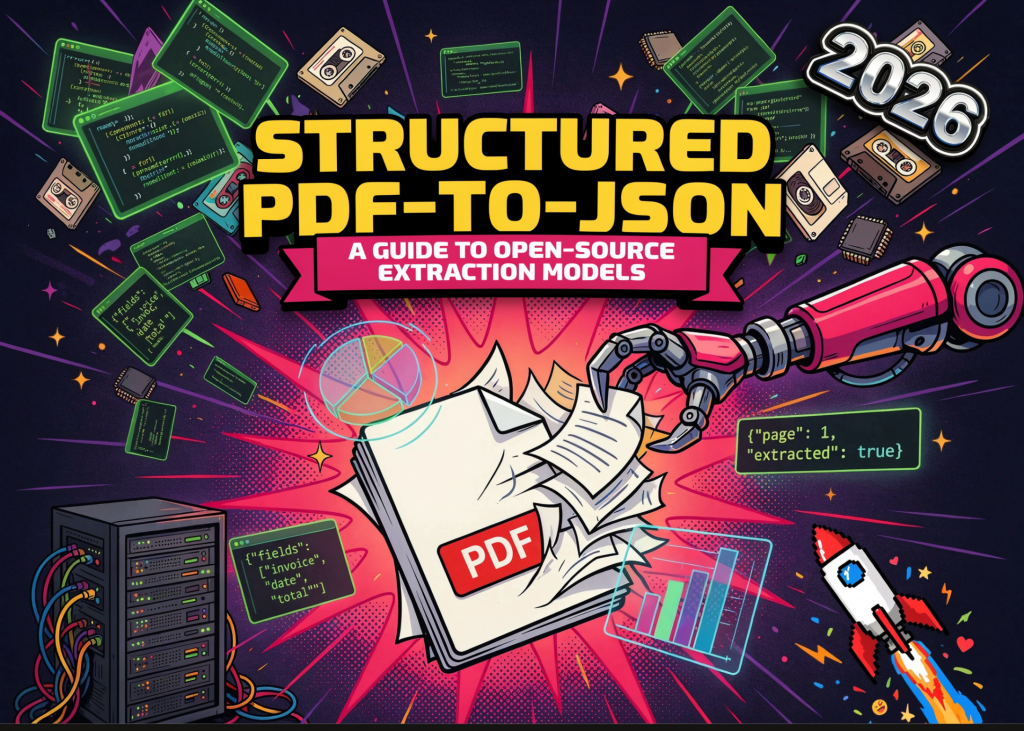
For decades, PDFs, scans, and slide decks have been the silent gatekeepers of corporate knowledge. Until now, that legacy format kept data locked in a box that only humans could read. In 2026, a wave of open‑source **PDF‑to‑JSON** models has shattered that barrier, giving AI agents and analytics engines instant, structured access to every contract, invoice, and research paper.
Why PDFs Still Rule the Data Landscape
Despite the rise of markdown and cloud‑native document formats, **PDF** remains the default for legal, financial, and regulatory filings. The problem? These files are *unstructured*—no schema, no tags, just a stream of text and graphics. AI systems powered by **large language models** can’t interpret raw PDFs unless the content is converted into a machine‑readable **JSON** schema. The conversion is the missing link that has kept enterprises from fully leveraging their own documents.
Open‑Source Models: The New Standard
Open‑source teams from **Microsoft**, **Google**, and independent labs have released a suite of extraction engines that run on consumer GPUs and even edge devices. These models blend **OCR**, **layout analysis**, and **semantic parsing** to produce JSON objects that mirror the original document’s structure.
- Gemini‑Extract – Google's flagship, boasting 99.2% accuracy on multi‑column PDFs.
- OptiParse – An NVIDIA‑powered model that delivers real‑time extraction on RTX 30‑series cards.
- LibreDoc – A community‑maintained pipeline that supports legacy scanned documents with a 15% error reduction


💬 Comments
Comments
Post a Comment