

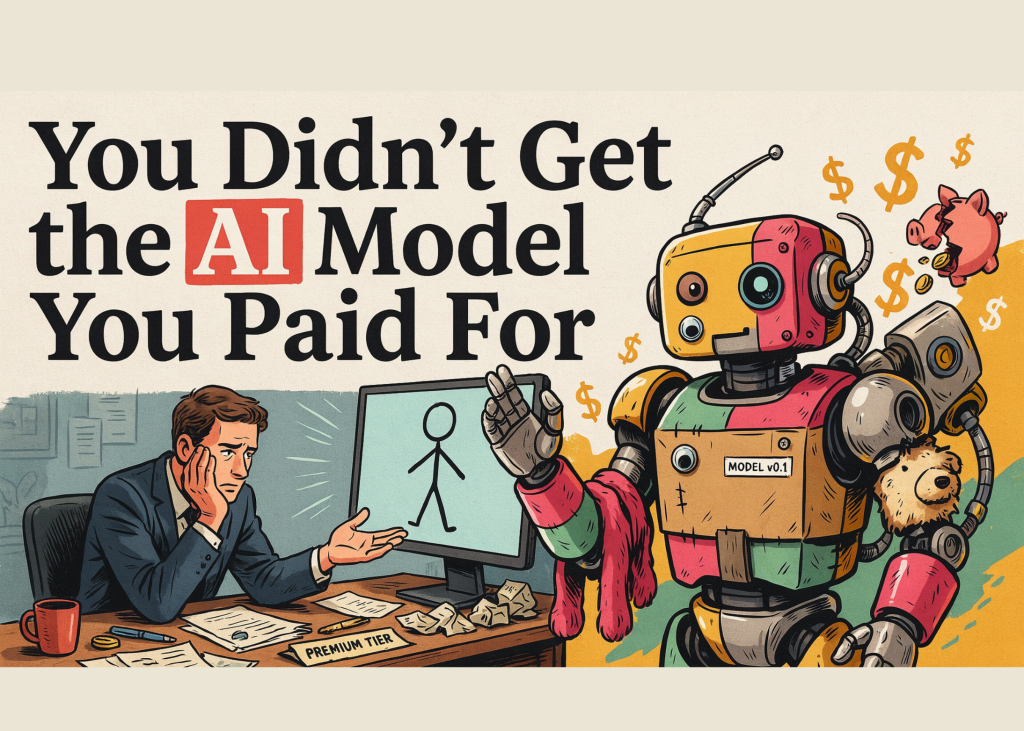
Anthropic announced a major update to its Claude series earlier this year, adding Claude‑Fable‑5 as a premium model. Developers worldwide rushed to integrate the new model, expecting faster responses and richer content. Suddenly, a growing number of users reported that the API returned Claude‑Opus‑4‑8 instead.
What Happened?
The glitch surfaced when developers submitted requests with model: "claude-fable-5". The response complied with the API contract: a completion, token count, and a model field. Yet, the returned model name was claude-opus-4-8. No error flags appeared, and the request was handled as if it matched a sensitive category requiring a different weight set.
- Anthropic’s classification engine misidentified the request as a “content‑filter” scenario.
- The engine rerouted the job to its Opus‑4‑8 weights, designed for higher‑risk content.
- Result: users paid for the premium Fable model but received spoiled results from the older Opus model.
Impact on Developers
The mismatch created a cascade of problems:
- **Cost overruns** – Fable is priced 40% higher than Opus, so teams faced unexpected bill spikes.
- **Performance gaps** – Fable promised 2× faster inference; Opus lagged, leading to slower user experiences.
- **Compliance risk** – Opus’s contentthetho rules differ, potentially breaching data‑handling agreements.
In Canada, a fintech startup saw transaction processing slow by 30 ms per user, directly affecting revenue projections. In the UK, a healthcare app that relied on Fable’s advanced medical reasoning received less accurate outputs, raising regulatory concerns.
Anthropic’s Response
Upon discovering the issue, Anthropic issued a statement: “We identified a misclassification in our content‑filter pipeline that caused certain requests to reroute to Opus‑4‑8. We have patched the router and will issue full refunds for affected accounts.”
What You Can Do Now
- **Verify your model key** – Include a
model_versionheader in your request and cross‑check the response. - **Set strict content‑type headers** – Disable the automatic content‑filter for internal testing environments.
- **Monitor billing anomalies** – Enable alerts when token usage deviates from baseline.
- **Use fallback logic** – If you detect a model mismatch, automatically retry with an explicit version string.
These steps help you safeguard against futureClasified misrouting and keep your projects on budget.
Looking Ahead
Anthropic’s incident underscores the importance of transparency in AI model routing. As the industry moves toward more complex, fine‑tuned models, developers must remain vigilant. Regular audits of API responses and clear contractual guarantees will become standard practice.
Stay ahead of the curve: follow us for the latest updates on AI reliability, model innovations, and industry best practices. If you’ve faced a similar mismatch, share your experience in the comments below—let's help each other navigate the evolving AI landscape.


💬 Comments
Comments
Post a Comment