

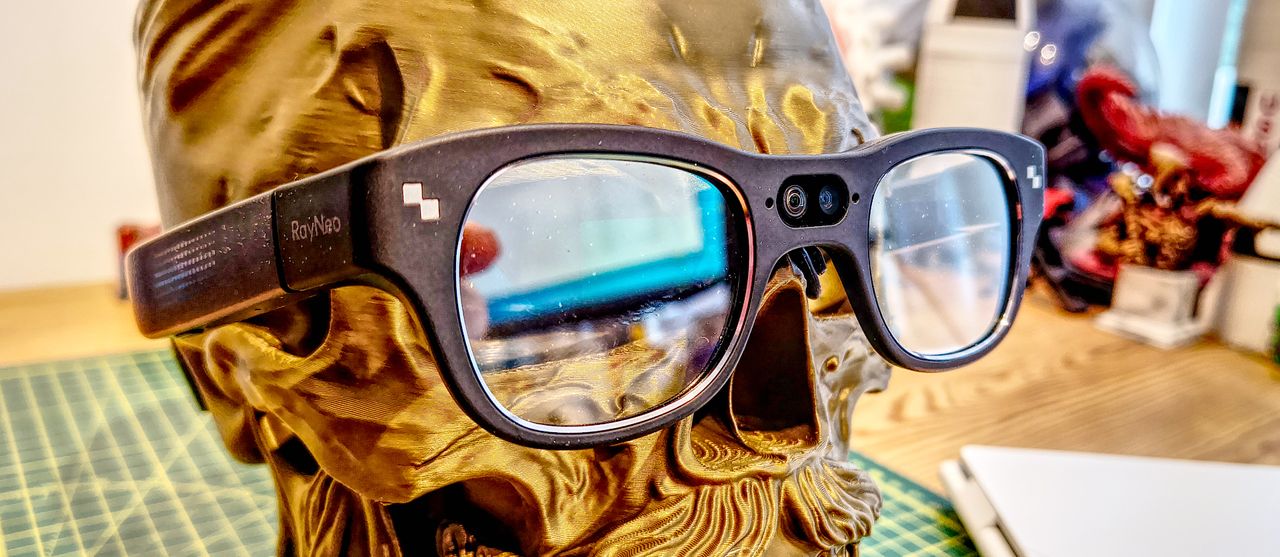
When the RayNeo X3 Pro hit the market, many expected a solid but unremarkable AR experience. Instead, it delivers a blend of cutting‑edge hardware and AI that pushes the boundaries of what smart glasses can do.
Why the RayNeo X3 Pro is a Game Changer
At the heart of the X3 Pro lies a dual‑eye MicroLED display that rivals even high‑end smartphones. Coupled with Qualcomm’s Snapdragon AR1 and Google Gemini 2.5 AI, the glasses can process complex visual tasks in real time, offering a truly immersive AR overlay.
Tech Specs That Set It Apart
The X3 Pro packs the following standout features:
- MicroLED displays—1200 nits brightness, 4K per eye, HDR10+
- Snapdragon AR1—8‑core CPU, 10‑core GPU iyeers 1.5‑2× faster than the previous AR1-2
- Google Gemini 2.5 AI—on‑device inference for gesture, speech, and scene understanding
- 12‑MP Sony sensor—high‑resolution photos and 4K video capture with optical stabilization
- 6‑axis IMUecode for precise head tracking and spatial audio support
Real‑World Performance
In everyday scenarios, the RayNeo X3 Pro shines. Navigation apps overlay turn‑by‑turn directions directly onto the road, while a real‑time translator mirrors foreign text in the user’s field of view.
The Gemini 2.5 AI excels at voice commands, even in noisy environments, and its gesture recognition feels natural without the clunky calibration many competitors require.
User Experience & Usability
Despite its high performance, some challenges remain. The glasses’ 1.2‑kg weight can feel heavy after extended use, and the touchpad on the frame can be finicky for rapid scrolling.
Battery life sits at around 5 hours of mixed AR usage, which is decent but leaves users scrambling for a charger on long commutes.
Is It Worth the Price?
Priced at $1,499, the X3 Pro sits above many mainstream AR offerings but below niche professional models.
For developers and power users who demand top‑tier display and AI, the cost is justifiable. Casual consumers might find the price steep unless they plan to use the glasses daily for navigation, language translation, or immersive media.
Future Outlook
RayNeo’s roadmap hints at a slimmer form factor and


💬 Comments
Comments
Post a Comment